What Is
AI UGC?
The creator economy shift no one is talking about — and who's already cashing in.
Read Time
12 min
Market (2024)
$12.9B
Entry Cost
~$150/mo
Income Ceiling
$50k+/mo
 AITechDad
 Human UGC
$285
per creative
 AI UGC
$38
per creative
Illustrative estimates based on industry-reported rates
Sources: Billo 2025 · MagicUGC 2025 (vendor data)
"She'd been paying creators $285 per clip. She switched to AI avatars. Her cost dropped to $38. Testing velocity went from 4 videos a week to 22. That was Q3 2025. I stopped treating this as a trend after that."
— Allen Yu · AITechDad · Personal client observation, Q3 2025. Individual results vary. Industry avg: Billo 2025, MagicUGC 2025.
The shift happened faster than anyone predicted — not in some distant future, but in active brand media budgets right now. Performance marketers at DTC companies, SaaS startups, and e-commerce brands have quietly started replacing their human UGC creator rosters with AI avatars.
Not because the quality is always better. Because the economics are radically different.
If you're still thinking of AI UGC as a gimmick or something that "looks fake," you're working with 2023 data. The quality gap has collapsed. What hasn't collapsed is the price gap — and that's exactly where the opportunity lives.
What AI UGC Actually Is
UGC (User-Generated Content) in advertising means short-form video — typically 15–60 seconds — designed to look authentic, personal, and unpolished. It mimics a real person talking directly to their phone camera. Brands have been paying creators to produce this "authentic look" for paid social campaigns since 2019.
The irony: "user-generated" was always a polite fiction. The content was creator-produced, brand-briefed, and heavily tested. The aesthetic of authenticity was the product — not actual authenticity.
The Core Definition
"AI UGC is short-form video produced using AI-generated avatars, synthetic voice, and generative visuals — engineered to match the performance and aesthetic of human-creator content in brand advertising campaigns."
AI UGC replaces the human creator in that equation while keeping the same look, feel, and functional output. An AI avatar delivers the brand's script with correct pacing and emotional register. Paired with AI voice synthesis and AI-generated b-roll, the output hits the same performance benchmarks — at a fraction of the cost.
The key word is performance. Not aesthetics. Not novelty. Conversion metrics — click-throughs, add-to-carts, sign-ups — at a lower CPA than human-produced alternatives. That's the only metric that keeps brands paying, and it's the metric AI UGC is now consistently hitting.
Why Most People Are Still Missing It
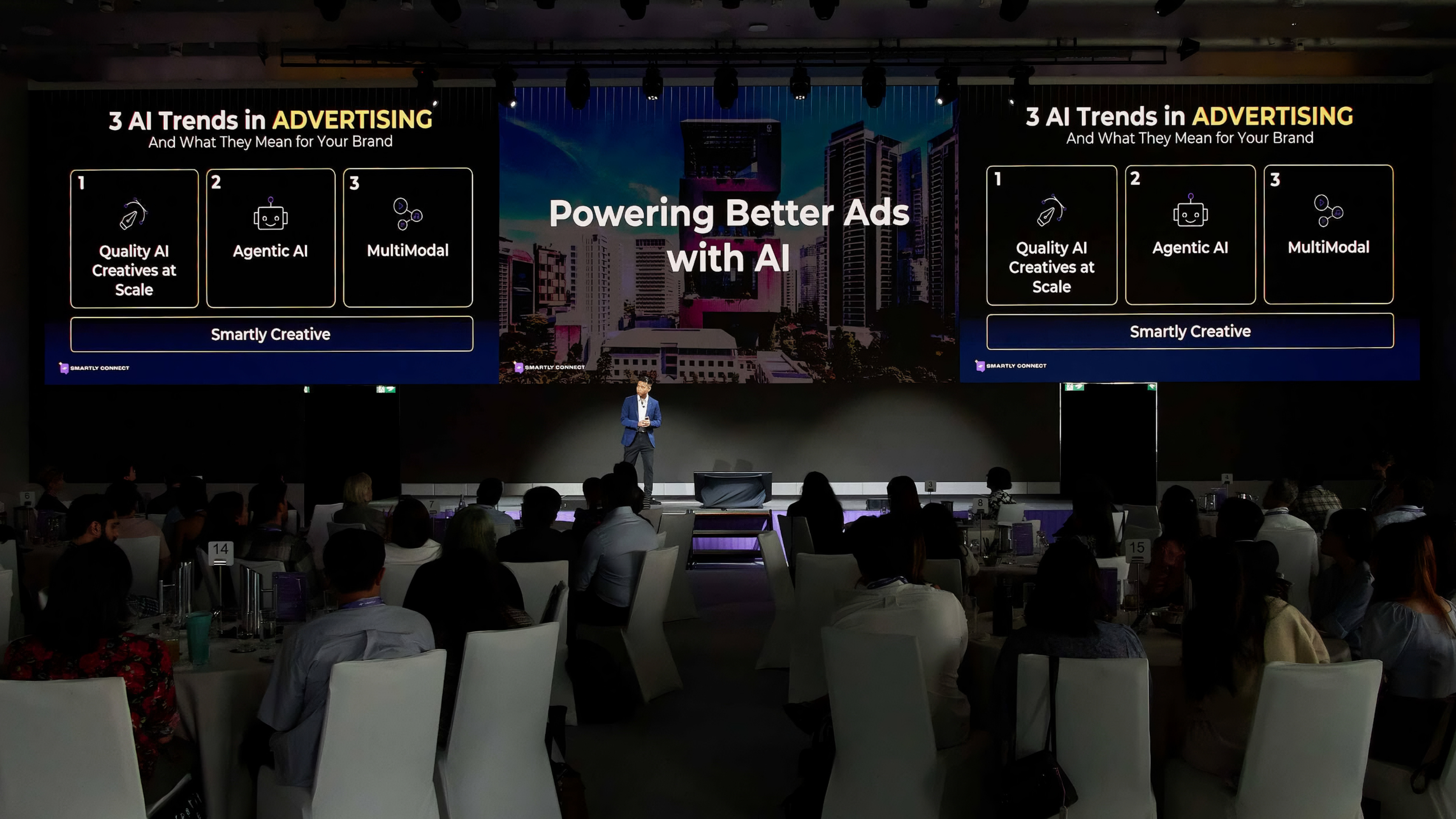
"3 AI Trends in Advertising" — Smartly Connect 2026
The brands are already allocating budget. Are you positioned to capture it?
The AI-generated content market hit $12.88 billion in 2024 and is projected to reach $53.79 billion by 2033 — a 17.3% CAGR — according to Grand View Research. Meanwhile, IAB's 2025 Digital Video Ad Spend Report found that 86% of video ad buyers are already using or planning to use generative AI to build video ad creative in 2025 — with AI projected to appear in 40% of all video ads by 2026. Most creators still think AI content = image generation = art stuff. They're missing the commercial layer entirely.
Mental Block 1: "It Looks Fake"
This was true in 2023. HeyGen avatars two years ago had a specific uncanny valley problem — too-smooth skin, eyes that didn't track, micro-delayed lip sync. Experienced viewers clocked it immediately.
The generation quality in 2026 is categorically different. In split tests by performance agencies, AI avatar ads are now statistically indistinguishable from human-shot UGC to cold audiences on paid social. The "fake" objection is a 2023 argument being applied to 2026 technology.
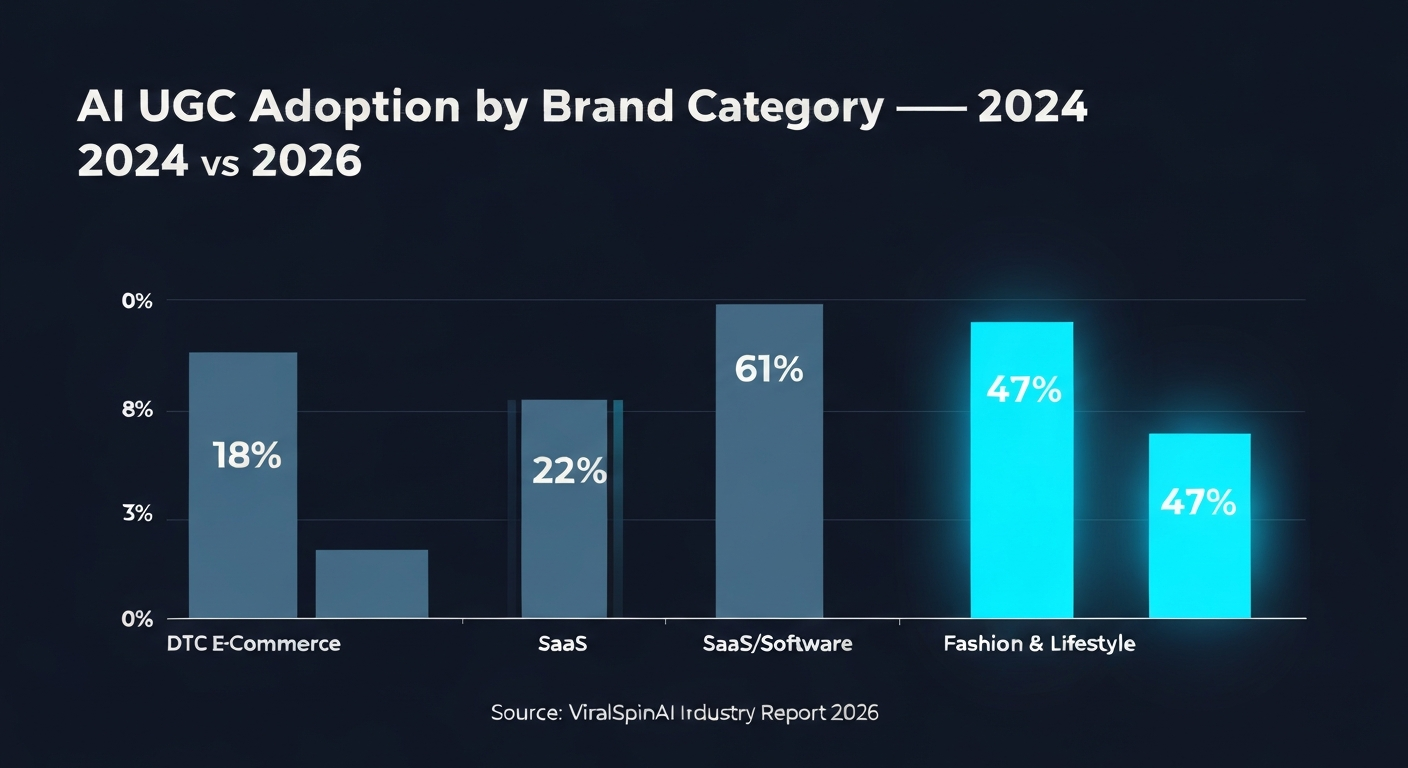
Chart is illustrative. Data sources: Grand View Research AI-Generated Content Market Report 2024 · IAB 2025 Video Ad Spend Report · Nielsen 2025 Annual Marketing Report
Mental Block 2: "The Tutorials Are Teaching the Wrong Thing"
90% of "AI content creator" content teaches you how to click buttons. Which button in HeyGen. How to upload a script. That's a feature walkthrough — not a skill. Tutorials are failing people because they teach tool operation instead of content performance.
Practitioners building $10k–$50k/month AI UGC businesses understand something different: the tool is 20% of the equation. The other 80% is knowing what makes a UGC creative actually convert — hook structure, scroll-stop logic, emotional arc, social proof placement. These are the skills that transfer from human UGC into AI UGC, and they're almost never taught.
The 4 Types of AI UGC
Not all AI UGC is the same. Understanding the formats is essential for knowing which clients to target, which tools to use, and what to charge.
AI avatar delivers brand script direct-to-camera. Highest demand.

Synthetic voice over b-roll. Fast to produce, high scalability.
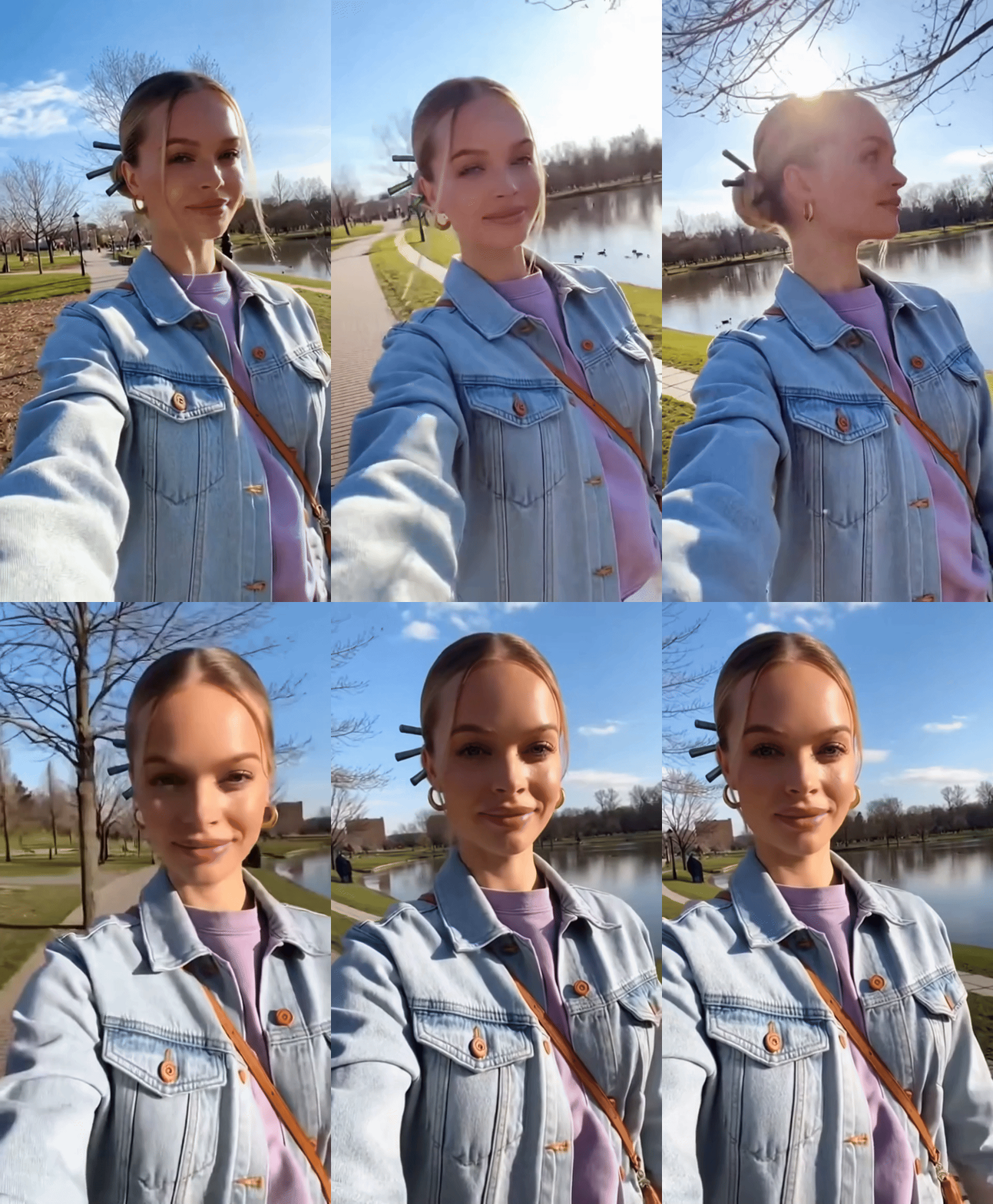
AI-generated video scenes as ad visual backbone. Most cinematic.
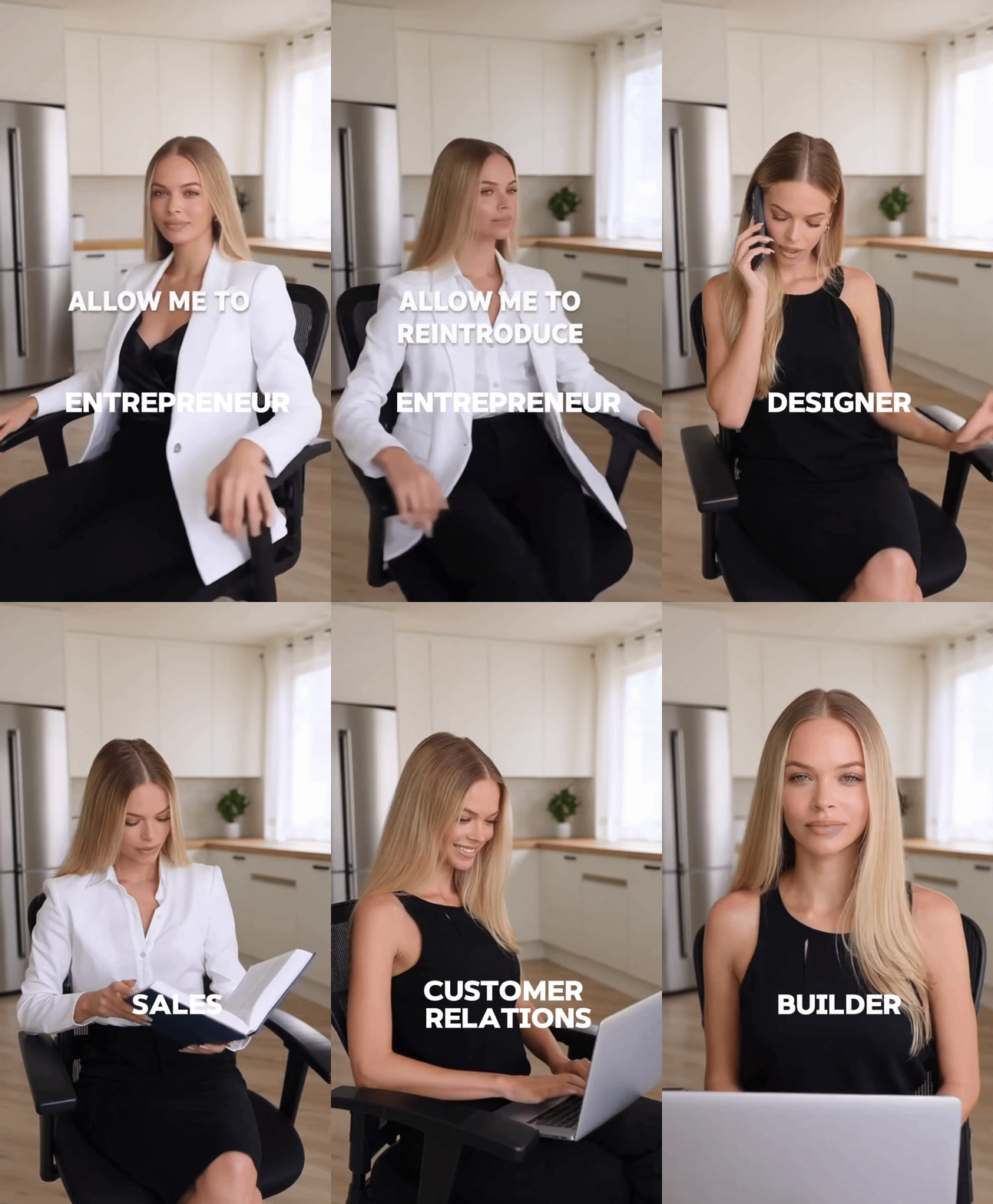
Avatar + b-roll + synthetic voice combined. Highest rates.
Of these four, Type 1 (Avatar UGC) and Type 4 (Hybrid) are what brands are actively briefing and paying for in 2026. Types 2 and 3 are often produced as part of a larger package rather than standalone deliverables.
The Production Workflow
Here's how a professional AI UGC creative actually gets produced — broken into three distinct phases. Most beginners skip straight to the tools. Professionals work the phases in order.
Foundation — Build Your Character
Before you write a word of script, you need a character. There are three distinct ways to create one — each with different use cases and price points.
Path A — Face Scan
Tool: HeyGen / Sora
Record yourself (5–10 min) and train an AI clone of your likeness. Most personal, highest-trust avatar. Used for personal brand and premium client work.
Path B — Text Prompt
Tool: HeyGen / Synthesia
Describe a character via text — age, gender, ethnicity, style, energy. Generate a new persona without a single real photo. Fast, scalable, no privacy concerns.
Path C — Image Ref
Tool: Midjourney + face swap
Use a screenshot or photo as a starting point. Modify the look, blend faces, or match a brand's existing spokesperson. Best for iteration.
"I prefer Sora over HeyGen for face scanning. HeyGen learns from your speaking cadence and gesture patterns in the sample clip — so the avatar mimics your mannerisms, not your actual face geometry. Sora does a true 3D reconstruction of your likeness. When a client needs photorealistic accuracy, that difference is visible."
Brand Brief — Know Before You Build
A brand brief is what the client hands you — or what you extract from them — before touching any tool. Without it, you're guessing. With it, every creative decision has a reason.
📋 What a Brand Brief Contains
Required Before Any ToolBrand + Product
What they sell, what problem it solves
Target Audience
Who's watching. Age, interest, pain point
Key Message
The single thing viewers must walk away believing
Tone
Fun / urgent / authoritative / educational
Mandatories
Show the product. Say this phrase. Avoid these words.
Platform + Length
TikTok 9:16 / YouTube 16:9 / Meta 1:1. 15s / 30s / 60s.
CTA
What should the viewer do? Link in bio / DM / buy now
Pro tip: Build a one-page intake form that pulls all of this from a new client automatically. It makes you look like a studio, not a freelancer.
Execution — Anatomy of a Prompt
A professional AI UGC prompt isn't one sentence — it's eight distinct components. Miss one and the generation comes back wrong. Nail all eight and you're submitting client-ready output.
Subject / Character
Who is on screen. Age, look, energy, wardrobe, relationship to the product. This is your Path A/B/C decision from Phase 1 landing in the prompt.
Environment / Setting
Where the scene takes place. Kitchen, gym, clean studio, outdoor market. Setting signals credibility and audience match before a word is spoken.
Lighting
Soft natural window light vs. ring-lit studio vs. golden hour outdoor. Lighting is the single fastest signal of production quality — get it wrong and the whole video reads cheap.
Aspect Ratio + Platform
9:16 for TikTok/Reels, 16:9 for YouTube pre-roll, 1:1 for Meta feed. This isn't just a crop — platform changes pacing, hook timing, and caption strategy.
Narration Script
The actual spoken words — hook, problem, solution, proof, CTA. Broken into timed beats, not just paragraphs. This is where the brand brief's key message becomes a performance.
Visual Details
On-screen text, product shots, graphic overlays, b-roll cuts. Describe what visually happens while the narration plays — not just what's said, but what's seen.
Audio Tone + Delivery
Pacing (fast-cut vs. slow burn), energy level (hype vs. calm authority), emphasis points, background music mood. You're directing a voice performance — give it enough to work from.
Direction (Hook + Camera)
Camera angle (straight-on, slight down-tilt for authority, close crop for intimacy), hook beat (what happens in seconds 0–3 to stop the scroll), and any gesture or movement direction.
After the Prompt — Assembly + QA
Assembly
Avatar footage + b-roll + captions + overlays assembled in CapCut. Advanced operators use programmatic assembly to scale without manual editing.
Quality Gate
Check lip sync, caption timing, hook retention, brand compliance. This QA layer is what separates a $38 Fiverr gig from a $350 professional deliverable.
The 2026 AI UGC Tool Stack
You don't need every tool — you need the right combination for the content type you're producing.
| Tool | Role | Best For | Cost/mo |
|---|---|---|---|
| HeyGen | AI Avatar generation | Types 1 & 4 | $29–$89 |
| ElevenLabs | Voice synthesis & cloning | All types | $22–$99 |
| Sora / Luma | Generative video b-roll | Types 3 & 4 | $20–$200 |
| Midjourney | Scene & product imagery | Static frames | $10–$60 |
| CapCut Pro | Assembly + captions | All types | $10–$15 |
| Claude / GPT | Script & brief engineering | Pre-production | $20 |
Total stack: ~$111–$483/month. A single client retainer at agency rates covers the entire stack. The economics are not complicated — they're just wildly favorable if you know what you're selling.
What Brands Actually Pay
Here's the actual rate reality, broken down by deliverable type and buyer segment.
| Deliverable | Freelance | Agency Rate | +Custom Avatar |
|---|---|---|---|
| Single Avatar UGC (30s) | $75–$150 | $200–$400 | +$150–$300 |
| UGC Ad Pack (5 variants) | $350–$600 | $800–$1,800 | +$500–$1,000 |
| Monthly Retainer (20 creatives) | $800–$1,200 | $2,500–$5,000 | +$1,000–$2,500 |
| Custom Avatar Build | $300–$600 | $1,000–$3,000 | One-time |
| Full Campaign (60-day) | $2,000–$4,000 | $8,000–$20,000 | Scope-dependent |
The "Pay Me" Test
"Can I produce 5 UGC variants for a brand in under 4 hours, at a quality level they'll run in paid media?" If yes — you're worth $800–$1,800 for that pack. That's not freelance pricing. That's agency pricing for agency-speed output.
Where the High-Value Work Comes From
- DTC e-commerce brands running Meta and TikTok paid social at scale — they need 20–40 creative variants per month for testing.
- SaaS companies producing demo and testimonial ads — can't get real customers on camera fast enough for their ad testing velocity.
- Media buying agencies who want a white-label AI UGC production partner — they handle the client, you handle the content.
- Brands expanding into multilingual markets — AI voice cloning makes it viable to produce the same creative in 8 languages. Almost no one is serving this yet.
The ROI Math
The comparison that brands run when they make the switch — and that you need to know to articulate your value.
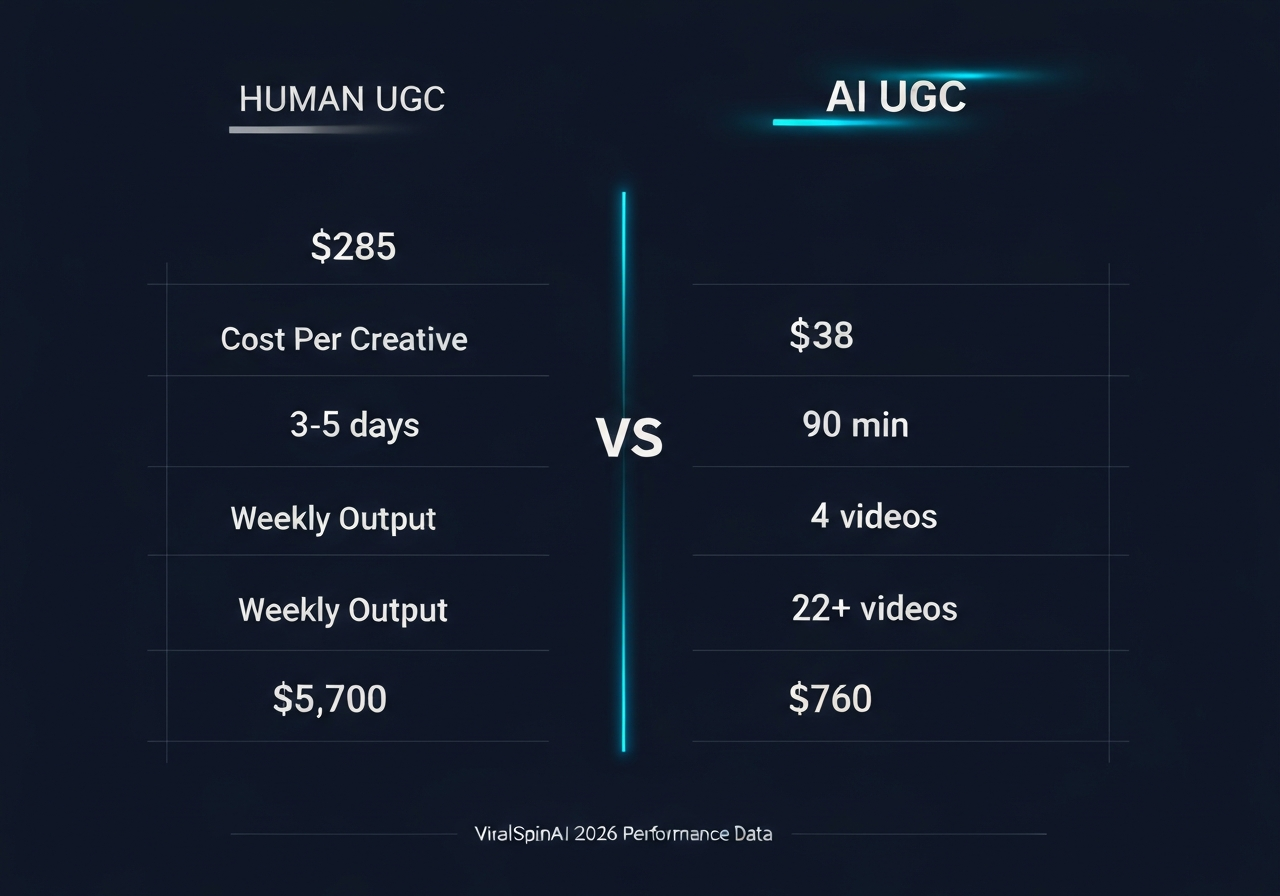
The math is not subtle. A solo AI UGC operator working 30 hours/week can produce what a 5-person human UGC team produces — at roughly one-tenth the cost. That's the arbitrage. That's why brands are switching.
For the income mechanics in depth — RPM benchmarks by niche, CPM arbitrage framework, and what a scaled AI UGC agency looks like at $12k–$50k/month — see the AI Creator Income Matrix.
How to Actually Start
The barrier isn't technical — it's knowing which clients to target and how to position the offer. Here's the honest 30-day entry map:
Build Your Production Stack
Sign up for HeyGen (Creator plan), ElevenLabs (Starter), and CapCut Pro. Produce 3 sample AI UGC pieces using existing brand products. Document your workflow and time each step. Goal: sub-90-minute production per piece by end of week one.
Build a Proof Portfolio
Produce 5–8 portfolio pieces across different niches: one finance hook, one e-commerce product, one SaaS demo. Don't wait for paying clients to build your reel. The portfolio is the sales tool.
Land Your First Client
Target DTC brands running Meta ads. Use Meta Ad Library to find brands spending on UGC-style content. Outreach pitch: produce a free AI variant of their current top-performing ad. Convert the free sample into a paid retainer.
Systematize and Scale
With one paying client, document your SOPs. Build templated brief structures, quality-gate checklists, and a client onboarding flow. Your second and third clients should cost 50% less time to onboard. This is the transition from freelancer to operator.
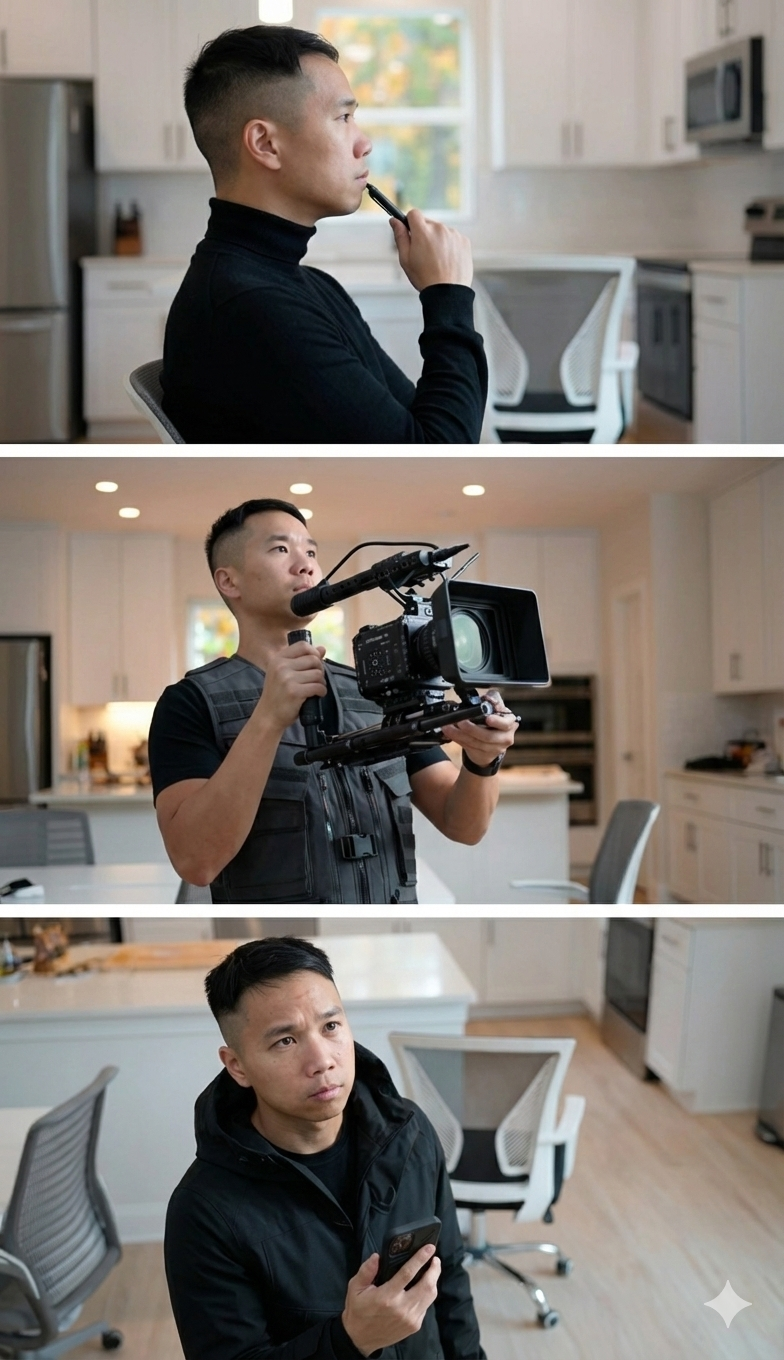
The AI-Enhanced Director
Think like a filmmaker. Execute like a machine.
The Cinematic Edge
Once you're producing consistently, the differentiator that moves you from $38-per-video commodity to $400-per-video premium is visual quality and storytelling craft. Understanding camera angle psychology, lighting logic, and movement principles for AI video — covered in the Cinematic Edge module — is what separates the operators charging $200 from those charging $2,000.
The Takeaway
AI UGC is not a content format. It's an economic model. It rewrites the math of video production in favor of anyone who understands both the technology and the performance principles that make short-form content convert.
The brands are already there. The media budgets are already reallocating. The question is whether you're positioned as a supplier to that demand — or whether you find out about it two years from now when the rates have compressed.
Right now, in 2026, the window is still open. The practitioners building systems, portfolios, and client relationships this year will own the category when it goes mainstream. Explore the full pathway in the AI Creator Knowledge Hub →
Stop Learning.
Start Deploying.
The ViralSpin AI Creator System gives you the complete production framework, client acquisition playbook, and tool stack to launch in under 30 days.
Get the Full SystemInstant Access · 30-Day Guarantee